Spotify Playlist vs. Hiring a Wedding DJ in Toronto: What Couples Actually Need to Know
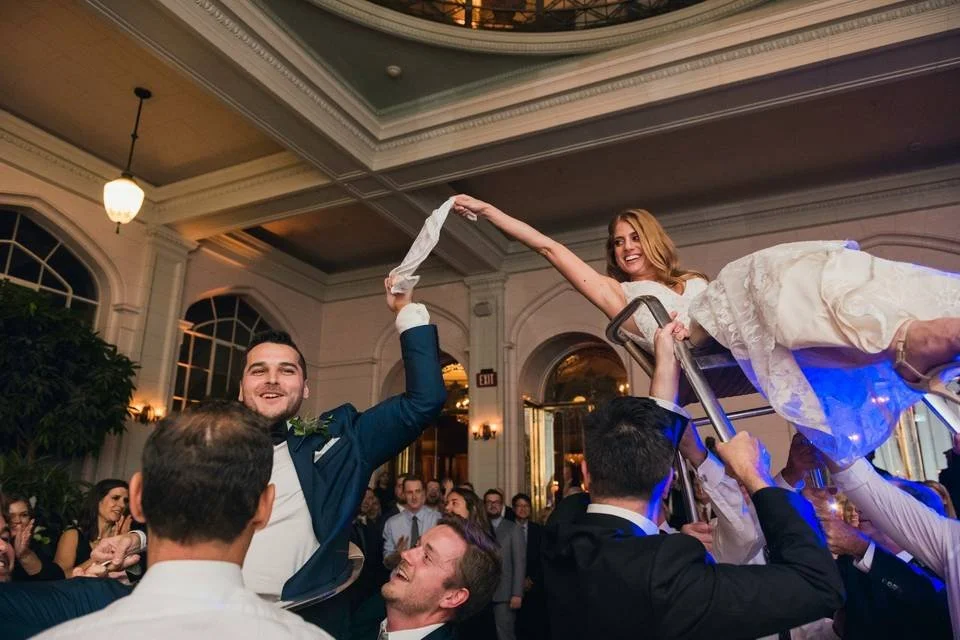
Casa Loma Wedding Toronto
Every couple planning a wedding hits this question at some point, usually around month six or seven of planning, right when the budget spreadsheet starts looking scarier than it did in January: do we really need to hire a DJ, or can we just build a really good playlist and plug it into the venue speakers?
It's not uncommon during our first consult that couples reveal they were initially considering a playlist over hiring a DJ. Sometimes it's a couple who already tried it at their engagement party and figured it worked fine there — so why not the wedding? But when the realities of what a wedding entails set in, they decide a DJ is worth the investment. I've DJ'd weddings across Toronto and the GTA for 15 years and and I want to walk through this honestly, including the situations where a playlist is genuinely the right call.
When a playlist actually makes sense
Could a playlist work for your wedding?
Run through these before you decide.
The rule of thumb: if you checked any of the bottom four, a playlist is going to cost you more in stress than it saves in dollars.
I'll start here because most DJ blog posts skip it, and it makes the rest of this feel like a sales pitch instead of straight talk.
If you're having a small backyard wedding with 25 guests, no formal dancing, no MC duties to manage, and music is really just ambiance while people eat and chat — a well-built playlist through a decent Bluetooth speaker can do the job. Same goes for a courthouse ceremony or an intimate dinner where nobody's expecting a dance floor. You don't need someone reading the room for a crowd that isn't planning to dance anyway.
Where it falls apart is anywhere there's a timeline to manage, a crowd over 50 people, or any expectation that the night builds toward an actual dance floor moment.
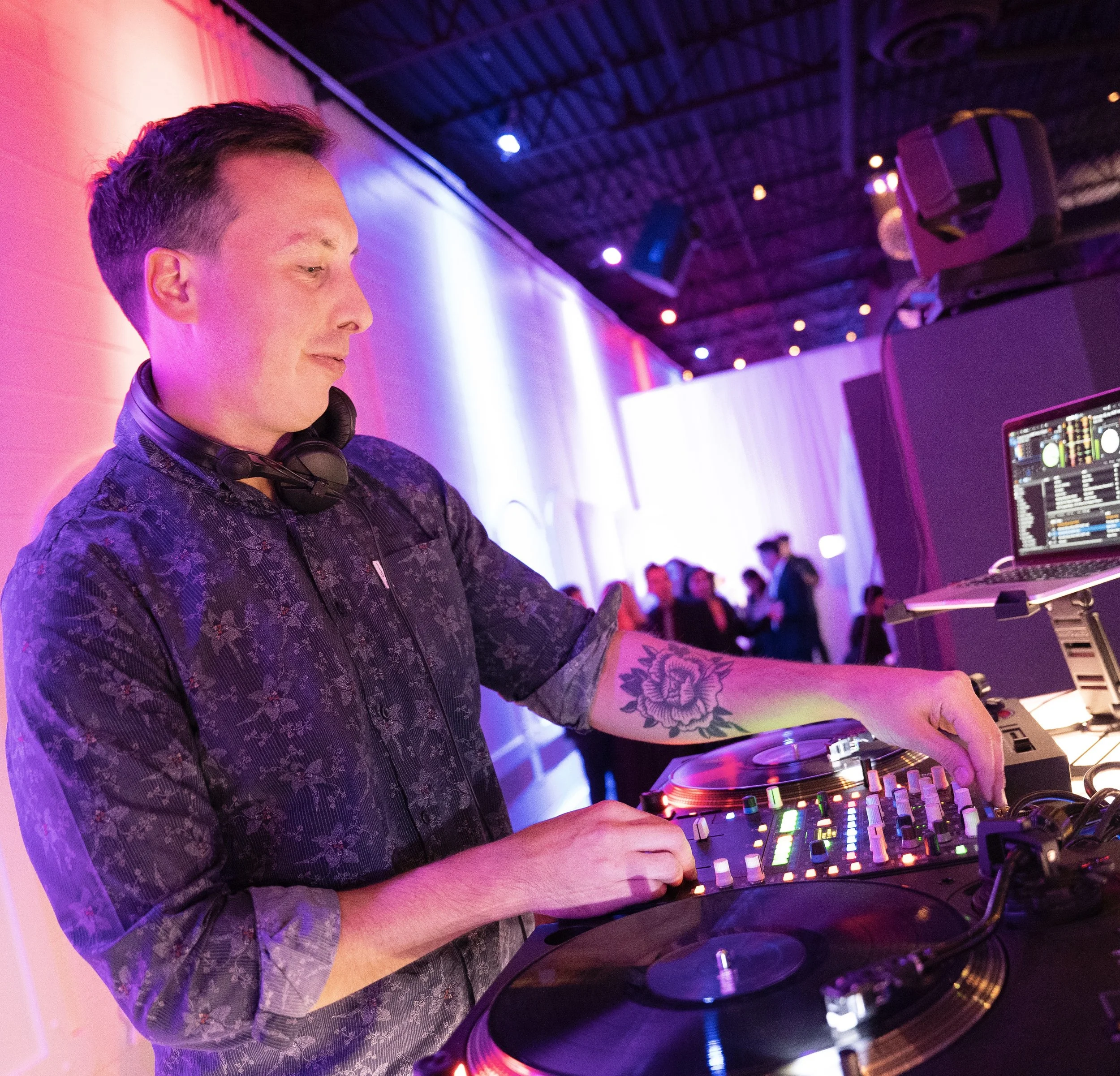
DJ Rich Sweet at York Mills Gallery
What a playlist can't do (and what actually goes wrong)
| What you need for a great reception | Option 1Playlist | Option 2Wedding DJ |
|---|---|---|
| Reads the room and adjusts in real time | ✕ | ✓ |
| Manages timeline (entrances, speeches, cake cutting) | ✕ | ✓ |
| Handles technical failures without disruption | ✕ | ✓ |
| Manages guest song requests professionally | ✕ | ✓ |
| Blends genres for a diverse Toronto guest list | ✕ | ✓ |
| Builds an energy arc across the night | ✕ | ✓ |
| Background music for a small, casual gathering | ✓ | Possibly more than you need |
| No additional cost beyond a streaming subscription | ✓ | ✕ |
Wedding vendors talk. Photographers, caterers, planners — we all compare notes, and a playlist reception that runs off the rails is not a rare story. Here's what keeps coming up.
Nobody's adjusting in real time. A playlist doesn't know that the dance floor just cleared out because three songs in a row leaned too hard into deep cuts nobody recognized. A DJ reads that immediately — sees the energy drop, feels it in the room, and corrects course before it becomes a fifteen-minute lull that's brutal to recover from. Spotify just keeps playing whatever's next on the queue, indifferent to the fact that your dance floor has emptied.
There's no one running the actual event. This is the part couples underestimate the most. A wedding reception isn't just music, it's a sequence: grand entrance, first dance, dinner service cues, speeches, cake cutting, bouquet toss, last dance. Someone has to call those moments, coordinate with the photographer and caterer on timing, and keep the night from sliding twenty minutes behind schedule. I've stepped in plenty of times where a planner or family member was trying to handle that role on top of everything else they were already doing, and it's a lot to ask of someone who's also supposed to be enjoying their cousin's wedding.
Technical failures happen, and there's no one to fix them. Bluetooth drops a connection mid-song. A venue's house speakers cut out. The phone running the playlist gets a low-battery notification at the worst possible moment, or someone's incoming call interrupts the music in the middle of the first dance. I bring professional equipment to every event for exactly this reason — redundancy that a phone and a borrowed speaker just don't have.
Guest requests turn into chaos. Someone's drunk uncle wants to play a song. Someone's cousin wants to plug in their own playlist "for five minutes." Without someone managing that gatekeeping, you either end up with a free-for-all on the aux cord, or your maid of honor spends her night fending off requests instead of being at the party.
The energy curve isn't built, it's just shuffled. A good wedding reception has a shape to it — slower and warmer during dinner, building gradually, peaking at the right moment, easing guests into the night's final stretch. That shape comes from someone watching the crowd and making real-time calls about tempo and genre, not from a pre-made playlist that plays the same way whether the room is packed or half-empty.
A real comparison: cost vs. what you're actually buying
Couples often frame this as "saving money," and I understand why — Toronto weddings are expensive, and DJ fees feel like an easy line item to cut. But it helps to think about what you're actually paying for. It's not really "music." It's someone managing the timeline, reading a room of a hundred-plus people in real time, handling whatever technical issue comes up without the bride and groom ever knowing it happened, and making decisions song-by-song based on what's actually working that night, not what sounded good on a Tuesday afternoon while building a playlist at home.
If you want the full cost breakdown for Toronto specifically, I wrote a separate guide on average wedding DJ pricing in Toronto that goes through what affects the range venue by venue.
What I've seen work at Toronto venues specifically
Toronto weddings have a particular wrinkle that makes the DIY playlist route even riskier: this city's guest lists are genuinely diverse, and that means music taste in the room is rarely uniform. I've worked weddings at venues like Archeo and Cluny Bistro in the Distillery District, and at the University Club downtown, where one side of the family wants classic Motown and disco, the other wants Bollywood or Afrobeats, and the couple themselves are into current Top 40 or hip-hop. A pre-built playlist locks you into one lane. A DJ reading the room can pivot genre by genre, watching which generation and which side of the family is filling the floor at any given moment, and adjust without anyone feeling left out.
That kind of real-time genre-blending is genuinely difficult to replicate without someone live behind the booth making those calls song to song.

DJ Rich Sweet at Symes Toronto
The bottom line
A Spotify playlist can handle background music. It can't read a room, manage a wedding-day timeline, troubleshoot a dead Bluetooth connection during your first dance, or know that it's time to pull the energy back up after dinner service runs long. That's the actual job, and it's why couples who try the DIY route at anything beyond a small, low-key gathering usually end up wishing they'd booked someone for it.
Not sure what's right for your wedding?
Every wedding is different. If you want a straight answer on whether hiring a DJ makes sense for your venue, guest count, and budget — I'm happy to talk it through, no pressure.
Get in touchToronto & GTA weddings — typically respond within 24 hours