The Toronto Wedding Reception Timeline: A DJ's Honest Guide
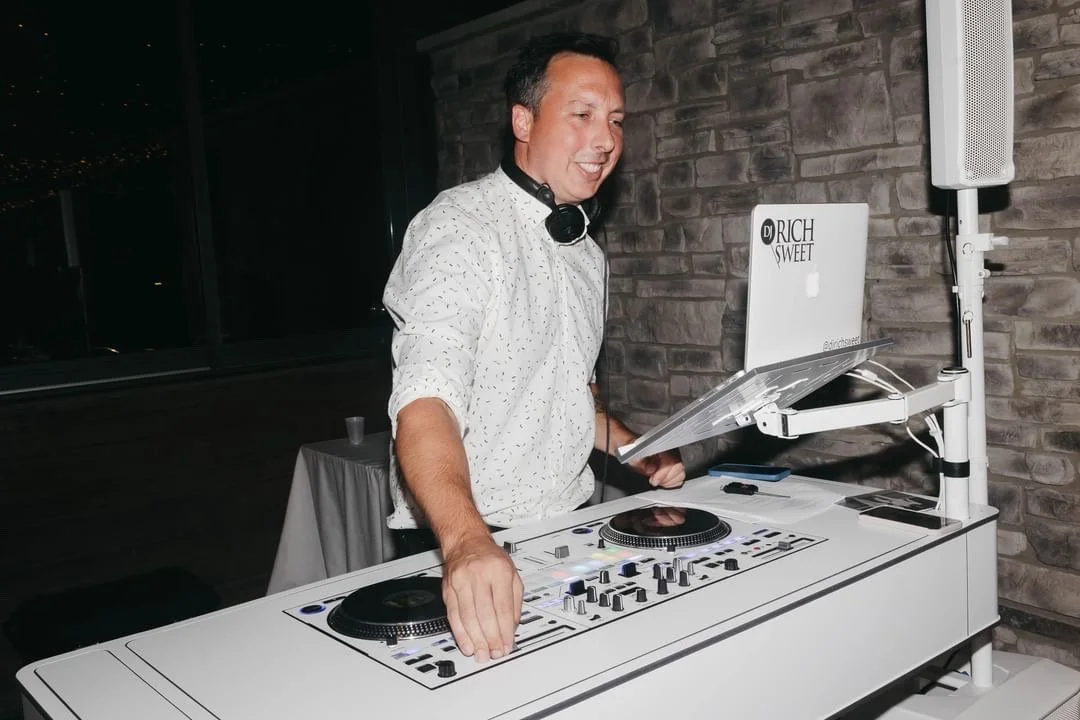
DJ Rich Sweet keeping the energy high at a recent Toronto wedding with a sleek, custom white booth setup. Photo by Cacie Carroll Photography
I've run the timeline at hundreds of Toronto weddings. The ones that go sideways almost always have the same problems — too many formalities stacked together, speeches that start too late, a dance floor that never recovers after a slow patch. Here's what actually works.
A Realistic 5-Hour Toronto Reception Timeline
Most Toronto receptions run five to six hours, typically starting with cocktails around 5pm and ending at midnight or 1am. Here's a template that works well across a wide range of venues and guest counts — from an intimate dinner at Canoe to a full ballroom at the Fairmont Royal York.
Standard 5-hour reception · 5:00 pm – 1:00 am
Cocktail hour
Guests mingle while the wedding party finishes photos. Jazz, acoustic covers, or soul — nothing with heavy bass that fights conversation.
Guests move to reception room
Transition music plays as the room fills. Energy starts to build. Keep it moving — don't let momentum stall here.
Grand entrance
Wedding party introduced, couple announced. High-energy song — keep it short and electric. The room should be on their feet.
First dance
Go straight into it while all eyes are already on you. Waiting until after dinner kills the momentum you just built.
Dinner service
Low-volume background music — guests need to be able to talk. Plated service: 60–90 min. Buffet: up to 2 hrs. Don't over-schedule this window.
Speeches
The sweet spot. Guests are fed and settled but not yet deep into the bar. Budget 20–30 minutes total. I push back hard on speeches after 9pm — by then you've lost the room.
Parent dances
Father–daughter, mother–son. An emotional bridge between the formalities and the party. Keep them back-to-back — don't let the energy drop between them.
Dance floor opens
The first 20 minutes are everything. I start with songs everyone knows — not the newest, but the ones that pull people out of their seats before they've talked themselves out of dancing.
Late night snack
A natural pause — guests refuel. A good DJ rebuilds energy right after, not five songs later. Don't let the floor go cold.
Last dance · reception ends
One song everyone knows. Leave them wanting more — the best endings feel slightly too soon.
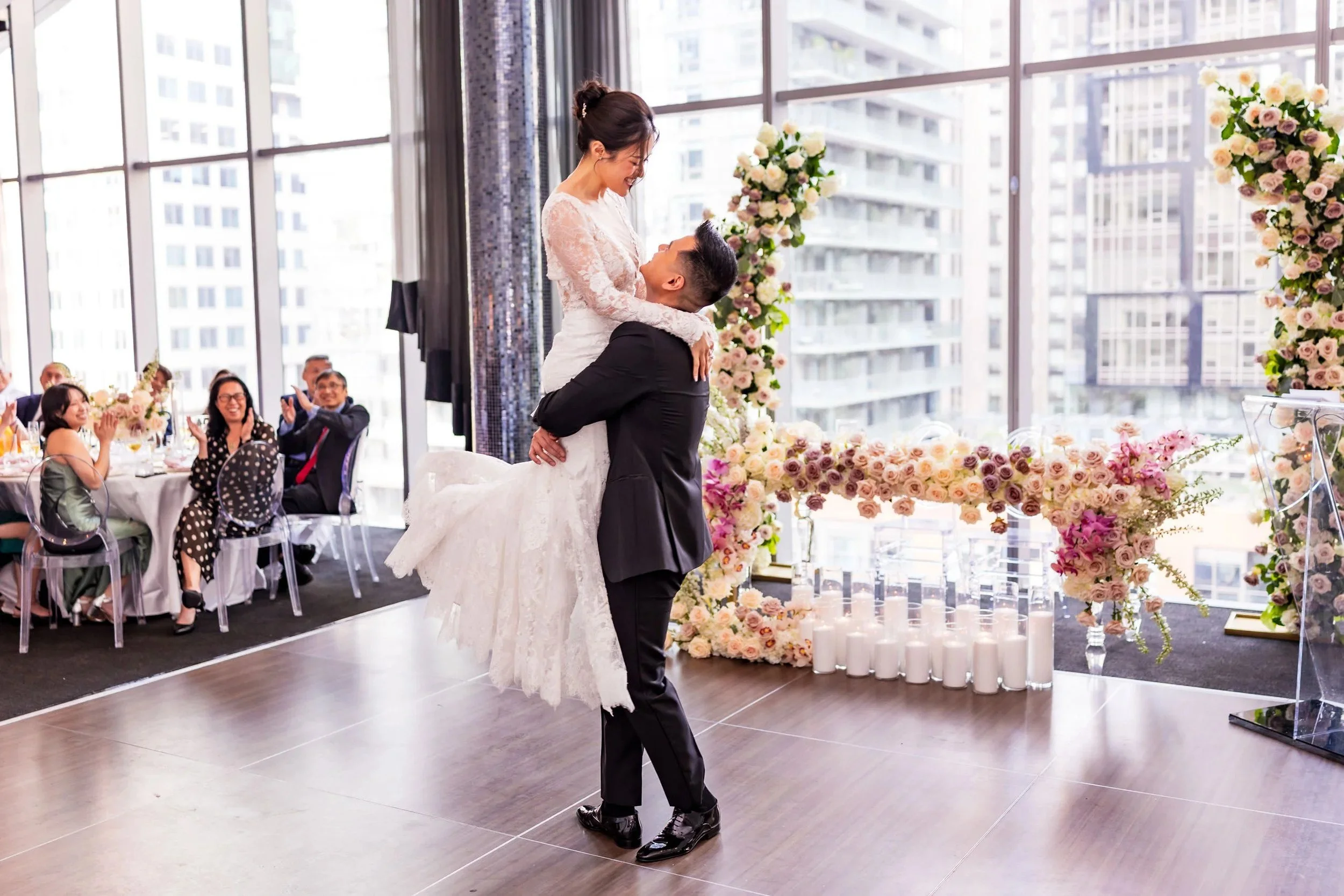
DJ Rich Sweet plays the music for a first dance at Malaparte. Photo by Diego Moura Photography.
Each segment, in depth
Cocktail hour
This hour does a lot of quiet work. Guests arrive, find their people, and settle in — while you and the wedding party are still in photos. The music during this window sets an expectation for the whole night. Get it wrong and the room feels off before the reception even starts.
Jazz, acoustic covers, soul and Motown all work well. Current pop can feel too casual; nothing with heavy bass or a strong beat — it fights conversation.
I gradually increase the tempo over the last 15 minutes of cocktail hour. By the time I announce the move to the reception room, the energy is already climbing — the grand entrance doesn't have to do all the heavy lifting.
Grand entrance + first dance
These two should flow directly into each other with no awkward pause between. Announce the wedding party, build to the couple's entrance, then move straight into the first dance while everyone is already watching and the emotion is high. Waiting to do the first dance later — or worse, saving it until after dinner — kills the momentum you just built.
I always ask couples if they want the wedding party to clear the floor or stay for the first dance. Leaving them on the floor can look chaotic in photos. Sending them off feels more intentional — and photographers thank me for it.
Speeches
7:30pm is the sweet spot — guests are fed and settled but not yet deep into the bar. I push back hard when couples want to move speeches to 9pm or later. By that point half the room has tuned out, the drunk uncle is getting loud, and the speakers are competing with ambient noise and restless guests. Early speeches land better, full stop.
Budget 20–30 minutes total. If you have four speakers, have a frank conversation about length before the day. I've watched a wedding lose its entire dance floor momentum because speeches ran 55 minutes.
I keep a mic ready to go and position myself to see the last speaker wrap. The transition from the final speech into the first dance floor song is one of the highest-stakes moments of the night — that gap needs to be seconds, not a minute of awkward silence.
Dance floor opens
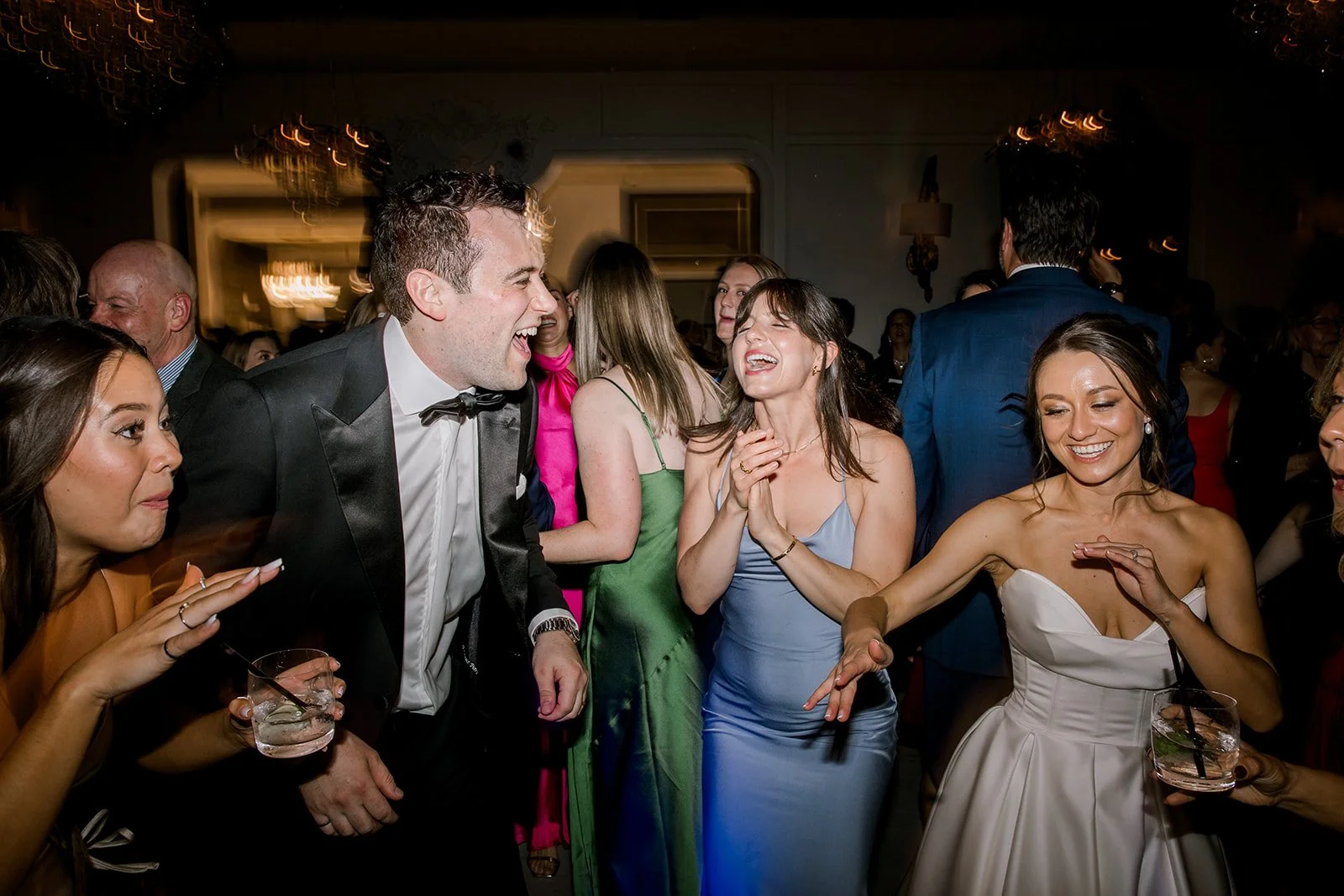
The first 20 minutes are everything. I start with songs everyone knows — not necessarily the newest or the most requested, but songs that pull people out of their seats before they've had time to talk themselves out of dancing. Once there's a critical mass on the floor, it becomes self-sustaining. The empty floor is the enemy.
I watch the floor constantly, not the booth. If I'm losing people at 9:30pm, I'm making a read and adjusting — not playing the next song on a preset list. That's the difference between a DJ and a playlist.
The three most common timeline mistakes
Mistake 1
Stacking formalities
Every structured moment interrupts dancing momentum. Grand entrance, first dance, speeches, cake cutting, parent dances — each one needs to earn its place. Group them, don't spread them across the night.
Mistake 2
Speeches after 9pm
By that point guests are deep into the bar and half the room has tuned out. 7:30pm is the window — guests are fed, settled, and actually paying attention. I push back on this one every time.
Mistake 3
No buffer time
Every wedding runs 10–15 minutes behind somewhere. Photos run long, dinner service is slower than expected, a speech goes over. Build the buffer in deliberately or spend the night feeling rushed.
What changes if your reception is 6 hours?
Where the extra hour goes
Usually cocktail hour extends to 75–90 minutes, or the dance floor gets an extra hour. Rarely put it into dinner — longer dinner service doesn't improve the night.
Ceremony-to-reception gap
If guests have a 90-minute gap between ceremony and reception, cocktail hour timing shifts. Build this into your timeline explicitly — don't assume guests will just wait around.
Venues with 11pm curfews
Several Toronto venues — and most Muskoka properties — have hard noise curfews. This changes everything. Speeches need to move earlier, dancing starts sooner, every segment tightens up.
Outdoor ceremonies
Weather delays happen. Build a 15-minute buffer after any outdoor ceremony before the reception start time — it almost always gets used.
Want help building a timeline that's specific to your venue and guest count? I do this for every couple I work with. Reach out here and let's start the conversation.